
Medellín Travel Guide 2026: The Crackdown And The Real City
Photo by Joel Duncan on Unsplash
Last updated: May 2026.
Medellín Travel Guide 2026
Most people picture one of two things when they hear Medellín. The cartel city from Narcos, frozen somewhere in the 1980s. Or the party town from Reddit threads, passport bros, nightlife, and a certain kind of traveler who makes the rest of us look bad.
Both versions are on their way out. What’s replacing them is something the adventure travel world hasn’t fully caught up to yet.
We’re Medellín locals. Born here, live here, been running tours for foreign visitors since 2015. This is what you actually need to know.

Photo by Nereid Ndreu on Unsplash
The Crackdown: What Actually Happened
Nobody planned this. That’s the part most travel writers miss.
The wave of sex tourism and party tourism that hit Medellín after the pandemic didn’t arrive with a warning. It crept in gradually, normalized itself quietly, grew a Reddit following, spawned YouTube channels, and by 2023 had become visible enough that residents of El Poblado were genuinely asking each other what had happened to their neighborhood. And then suddenly it was everywhere, moving faster than anyone expected.
Paisas are a particular kind of people. They don’t protest loudly before acting. They watch, they assess, and when the moment comes they move with speed and without apology. Before the situation could define the city permanently, the city defined its response.
In 2024, Mayor Federico Gutiérrez (known locally as Fico) issued emergency decrees after police found a 36-year-old American with two underage girls in his El Poblado hotel room. Prostitution was suspended around four of the neighborhood’s most frequented parks. Nightclub hours were cut. Then Colombia’s migration authority activated the Angel Watch program, giving airport officials real-time access to US sex offender registries. Travelers arriving with suitcases packed with condoms and sex toys are flagged and turned back. In the first five months of 2026 alone, 73 tourists were denied entry at Colombian airports; 48 of them at Medellín’s José María Córdova, 51 of the 60 Americans.
The Cases That Made Headlines
The influencers got their turn
Chill Capo, a 42-year-old American who had been running sex tourism packages from Medellín since 2022 while advising followers how to evade immigration controls, was deported on April 11, 2026 and banned for five years. Casey Red Beard landed at El Dorado in Bogotá on May 23, 2026 and was immediately sent back to Miami with a ten-year ban from reentry, based on years of prior complaints about organizing private sex parties for foreign visitors.
The long-term residents making their neighbors’ lives hell got their turn too.
George Laevsky Wolfe, known as El Ruso, spent two years throwing non-stop parties in his El Poblado apartment, accumulating 12 police sanctions and ignoring every voluntary departure agreement he signed. On April 13, 2026, Fico posted four words on X: “El Ruso pa fuera.” Wolfe was put on a plane to Miami. He crossed back in illegally through Ecuador and on May 17, 2026 was caught at Cali’s airport trying to board a flight to Medellín. Expelled again, this time to Panama, ten-year ban. He has since sent Fico threatening WhatsApp messages. The mayor filed a complaint with the Fiscalía and handed the evidence to US authorities.
This kind of response doesn’t happen in many places. Cartagena has watched similar dynamics unfold for years without comparable pushback. Thailand built an entire tourism economy around the problem. Brazil’s most visited cities cycle through the same conversations without resolution. Medellín looked at what was happening and decided, quickly and collectively: not here. Not again.
Overall tourism rose 26% in 2024. The city got more popular while removing a specific type of visitor. That’s what a city that knows its own value looks like.
No serious traveler should be deterred by any of this. The crackdown has zero effect on visitors who come here for what the city actually offers. Which is considerable.
What Medellín Actually Offers
The city sits in a narrow Andean valley at 1,500 meters (4,900 feet) above sea level. The temperature stays between 18 and 28 degrees Celsius (64 to 82°F) year-round. Colombians call it the City of Eternal Spring and for once a tourist slogan is accurate.
The infrastructure is genuinely impressive for a city of its size. The Metro is clean, fast, and safe. The cable cars that connect hilltop communities to the Metro network are one of the best urban transit experiences in South America. There is a nightlife scene that competes with any city in Latin America. There are world-class restaurants, boutique hotels, and a food culture that keeps improving.
And surrounding the city on all sides, within a two-hour drive in any direction, is some of the most spectacular mountain terrain on the continent.
Culture and City Life

Photo by Gustavo Sánchez on Unsplash
Plaza Botero and Museo de Antioquia
Fernando Botero is Medellín’s most famous son. His oversized bronze sculptures occupy an entire plaza in the city center, free and open to the public at all hours. The Museo de Antioquia sits alongside them, housing one of Colombia’s most significant art collections in what was once the old Municipal Palace. The combination of outdoor sculpture park and proper art museum in one spot is hard to find anywhere else in South America.

Parque Explora, Medellín — Photo: Averpues / Wikimedia Commons / CC BY-SA 4.0
Parque Explora
A 22,000 square meter science and technology museum complex in the north of the city, near the Universidad de Antioquia campus. It has a planetarium, a vivarium with over 400 species of reptiles, amphibians, and fish from Colombian waters, interactive science exhibits, and a children’s section. It earned international recognition for its architectural design and its approach to science education. Worth several hours of anyone’s time.

Jardín Botánico
13.2 hectares of botanical garden in the city, receiving over two million visitors a year. The orchid collection is exceptional. There’s a full tropical forest section, a desert garden, a medicinal herb garden, and a lagoon. The Orquideorama is the architectural showpiece, a canopy structure that’s been photographed by every architecture publication in the world. On weekends the surrounding streets fill up with food stalls and live music.
Parque Arví
Take the Metro north to Ayura station, transfer to the cable car, and ride 16 kilometers up into a 16,000-hectare nature reserve in the mountains above the city. The Parque Arví is a proper ecological reserve with hiking trails, bird watching towers, artisan markets, and views that make the ride up worth it by itself. It’s one of the most undervisited things in the city given how easy it is to access.
Museo Casa de la Memoria
Free admission. The museum documents Medellín’s years of conflict through testimonies, photographs, and installations. It’s not a comfortable visit. It’s not supposed to be. For anyone who wants to understand how this city got from there to here, this is the most honest account available anywhere.

Metrocable
Most cities with cable cars built them for ski slopes. Medellín built its for public transit and it now has five lines integrating hilltop communities into the broader Metro network. Riding them is both a genuine transit experience and one of the best views in the city. The Línea L goes all the way to Parque Arví. Foreigners who visit for a week and never take the cable car have missed something real.
The Nightlife and Food Scene
The honest version: El Poblado is fine. It’s the neighborhood most tourists default to and it has plenty of good restaurants and bars. But it’s also the area most affected by the tourist influx of the past decade and it shows. Prices are higher, the streets fill with the same faces, and it has started to feel like an international expat zone rather than a Colombian neighborhood.
Where Locals Actually Eat and Drink
Laureles is where the city actually eats and drinks. Residential, local, and increasingly well-regarded by anyone paying attention to Colombian food culture. The quality-to-price ratio is better across the board.
For a proper burger, Chef Burger started as a single El Poblado spot created by Paisas in 2011 and earned enough of a following to expand across the city. It’s the kind of place locals actually go to, which in a city where tourist-facing restaurants have multiplied fast, means something.

Medellín’s tango culture
is worth knowing about. Carlos Gardel, the most famous tango singer in history, died here in a plane crash in 1935. The city never forgot him. There are milonga nights, tango bars in the Manrique neighborhood, and a full International Tango Festival every June.

Render cortesía Alcaldía de Medellín
Coming in 2027: Gran Parque Medellín
Mayor Gutiérrez announced an investment of 195 billion COP to transform the Juan Pablo II aeropark, next to Olaya Herrera Airport, into something genuinely remarkable.
The Gran Parque Medellín will have 12,000 square meters of artificial sea, a 5,000 square meter artificial beach, a 2,500 square meter wave pool, two Olympic pools, and two semi-Olympic pools. Mayor Gutiérrez put the scale in perspective: the water surface alone equals 10 Olympic pools, comparable to the beach at Johnny Cay island and double the beach at Taganga in Santa Marta.
The complex will integrate the existing BMX track named after Olympic champion Mariana Pajón, the athletics and cycling circuit expanding from 1.5 to 3 kilometers, and the María Luisa Calle sports complex. Total footprint: 210,000 square meters. Sports offered will expand from 26 to 39 disciplines. Activities will include kayaking, water polo, snorkeling, sailing, synchronized swimming, and underwater rugby.
Construction started this year. Full inauguration is scheduled for the first semester of 2027.
The mayor said it plainly: the only thing Medellín was missing was the sea and the beach. It won’t be missing either for much longer.
The Mountains Are the Real Reason to Come
The cultural city is excellent. The mountains surrounding it are extraordinary.
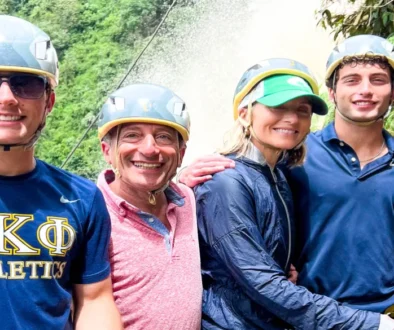
Within two hours of the city center in any direction: paragliding over Andean valleys, white water rafting through jungle canyons, canyoning with 40-meter (130-foot) waterfall rappels and emerald jungle pools, via ferrata climbs next to thundering waterfalls, a 40-kilometer gravity bike ride down a forgotten mountain road from 2,730 meters (8,950 feet), zip lines 700 meters (2,300 feet) long and 300 meters (985 feet) high over canyon and waterfalls, ATV trails through rural Antioquian villages, and day trips to Guatapé and the granite monolith El Peñón rising 200 meters (656 feet) from a reservoir.
Most of these can be combined into a single day. You can paraglide in the morning and raft in the afternoon. You can do ATV and canyoning on the same trip. You come back to a city with proper restaurants and good hotels waiting for you.
We’ve been running private English-speaking adventure tours out of Medellín since 2015. If you want to spend a day or more in the mountains while you’re here, this is what we do.
Practical Notes for 2026
Getting around
Use Uber or Cabify within the city. The Metro covers the main north-south corridor and is genuinely good. For day trips into the mountains, go with a private operator who knows the roads. Here’s a a guide on how tourists get around Colombia without public buses.
Where to stay
El Poblado for convenience and nightlife access. Laureles for a more local feel and better value. Envigado for quiet and residential. All three are safe tourist areas.
Safety
Medellín is safe in the tourist neighborhoods. Use Uber instead of street taxis, keep your phone out of sight in crowded areas, and apply the same common sense you’d use in any major city. The crackdown has made El Poblado noticeably better managed than it was two years ago. Here’s a Medellín safety guide with practical tips for navigating the city while traveling.
Budget
Medellín is no longer the budget destination it was five years ago. Digital nomads and expats pushed prices up significantly. Restaurants, hotels, and services in El Poblado now reflect that. Plan for real costs, not 2019 expectations.
Best time to visit
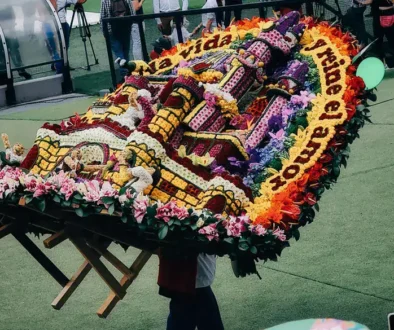
Any time. The climate at 1,500 meters (4,900 feet) doesn’t have a bad season. The Flower Festival in late July and early August is the best single week to be here if you can plan around it. Here’s a complete guide for Medellín Flower Festival 2026.
FAQ: Medellín Travel Guide 2026
The Bottom Line
Medellín was always a better city than its worst reputation suggested. The transformation since the 1990s is real, documented, and visible to anyone who spends more than a day here. The post-pandemic tourism boom brought problems that the city is now actively correcting.
What’s left when you remove the narco tourism mythology, the passport bros, and the bachelor party economy is a city of two and a half million people with a world-class Metro system, serious cultural institutions, food and nightlife that keeps improving, and some of the most spectacular mountain terrain in South America sitting an hour from the city center in any direction.
The reputation Medellín is building now is the one it deserves.