Medellín vs Cartagena, Which Colombian City Should You Visit?
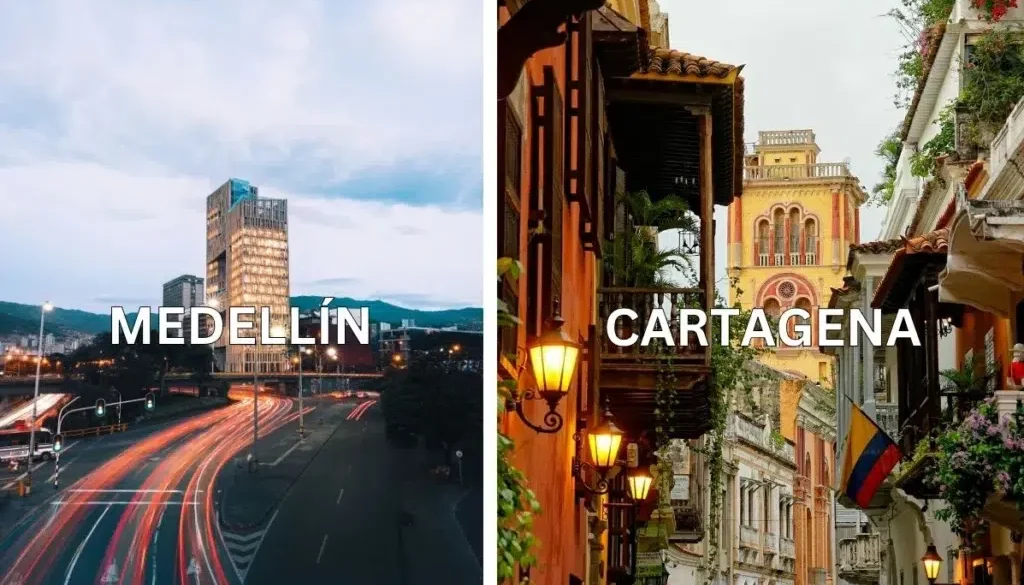
This is the question we get from Americans planning their first Colombia trip more than almost any other. And honestly, it’s a tough one to answer with a simple “go here” because these two cities are so fundamentally different that comparing them is almost like comparing Miami and Denver. Same country, completely different experience.
I’m a Medellín local. I’ve lived here my whole life, run adventure tours out of the city since 2015, and I’ve been to Cartagena more times than I can count. So here’s the honest breakdown, with no agenda other than helping you figure out which city is right for your trip.
Medellín vs Cartagena At a Glance
| Medellin | Cartagena | |
|---|---|---|
| Temperature | 18-28º year-round | 30-35º with humidity |
| Population | ~2.5M | ~1M |
| Best for | Adventure, culture, food, night life | Beach, history, architecture |
| Typical stay | 4-7 days | 2-3 days |
| Ideal combo | 5 days | 3 days |
The Biggest Difference: Weather
This one matters more than people expect, so let’s start here.
Cartagena sits on the Caribbean coast and it is hot. We’re talking 30 to 35 degrees Celsius, which is 86 to 95 Fahrenheit, with humidity that makes it feel worse. You will sweat walking half a block. You’ll shower twice a day. If you don’t do well in heat and humidity, this is genuinely important information before you book.
Medellín is the opposite. It sits in a valley in the Andes at about 1,500 meters above sea level, and the temperature stays between 18 and 28 degrees Celsius year-round, roughly 64 to 82 Fahrenheit. Comfortable, walkable, and perfect for being outdoors. There’s a reason people call it the City of Eternal Spring. That nickname is earned.
If you’re heat-sensitive or you plan to spend a lot of time outdoors and active, this tilts heavily toward Medellín.
Activities and Things To Do
This is where the two cities really pull apart.
Cartagena is a historic walled city, a UNESCO World Heritage Site, and it delivers exactly what you’d expect from that: cobblestone streets, colorful colonial buildings, rooftop bars, boat trips to the Rosario Islands, and a very relaxed beach vacation energy. Two to three days gives you a solid feel for it. After that, most people run out of new things to discover.
One thing Cartagena does have that most tourists don’t know about: skydiving. It’s the only place in Colombia where you can do a coastal jump — you free-fall over the Caribbean with the islands and coastline below, and the included GoPro footage comes out genuinely spectacular. We offer skydiving in Cartagena as part of our tours, and it’s one of those experiences people talk about for years.
Medellín has layers. There’s the cultural side, with world-class museums, the famous Botero sculptures, and cable cars that take you up into hilltop communities with views over the whole valley. There’s a nightlife scene that rivals any city in Latin America. And then there’s what brings most of our clients here: the outdoor adventure.
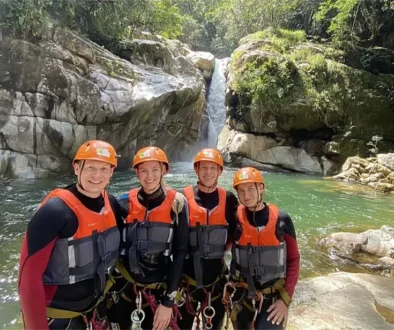
Paragliding over the Andes, white water rafting on rivers that run through stunning jungle canyons, ATV tours through mountain villages, canyoning down waterfalls, and day trips to Guatapé with its giant painted rock rising out of a reservoir. None of that exists in Cartagena. If you want active, outdoors, and genuinely thrilling experiences, Medellín isn’t a close call.
Cost
Let’s be honest about something that’s changed in recent years. Medellín has a reputation as a budget destination, and that reputation is fading fast. The city has become enormously popular with American and European digital nomads and expats, and prices have followed. Restaurants in El Poblado, hotels, and tourist-facing services have all climbed noticeably. Medellín is still significantly cheaper than Miami or Los Angeles — but the “stretch your dollar like a king” era is on its way out.
Cartagena has always been the more expensive of the two. It’s a beach resort city with cruise ship traffic, and the historic center in particular carries premium prices for everything from hotels to cocktails.
Neither city will break the bank compared to a trip to Europe or the Caribbean islands. Just budget accordingly and don’t show up expecting 2018 prices in either place.
Safety
Both cities are safe for tourists who use common sense. Neither is the Colombia of 30 years ago, and both have popular tourist areas that are well-traveled, well-lit, and comfortable.
Let me address something specific because it comes up constantly in travel blogs: the “don’t take your phone out on the street in Medellín” advice is overblown. Walk around El Poblado, Laureles, or Envigado and you’ll see everyone on their phones. People have watches, jewelry, laptops at café tables. Locals aren’t scurrying around hiding their belongings. The use-common-sense rule applies here just like it would in New York or Barcelona — be aware of your surroundings, don’t wave a $1,500 phone around in a crowded market at night, and you’re fine.
Same principle in Cartagena. The historic center and Bocagrande are the main tourist zones and both are safe. In either city, use Uber or a trusted app rather than hailing random taxis, and if you’re going out late, know where you’re going before you leave.
The three Medellín neighborhoods worth knowing by name: El Poblado (upscale, trendy, tourist-central, lots of restaurants and nightlife), Laureles (more residential, lower-key, preferred by longer-term visitors), and Envigado (the most local feel, cheaper, quieter). Any of the three is a solid home base.
If you want a more detailed breakdown of safety in Colombia specifically for Americans, I wrote a longer guide on that here.
Who Should Go to Cartagena
Go to Cartagena if you want a classic Caribbean beach vacation with colonial history and architecture. It’s beautiful, romantic, and the old walled city is genuinely stunning to walk through.
That said, there’s something no travel blog tells you loudly enough: Cartagena has a serious street vendor problem, and it has gotten worse. The moment you step outside your hotel you will be approached, followed, and pestered relentlessly. Street vendors, beach vendors, women offering massages, guys trying to rap at you and then demand payment, people selling hats, fruit, jewelry, boat trips, and things you never knew existed. They are aggressive, they are persistent, and they do not take a polite “no thank you” as a final answer.
On the beaches it’s even more intense. You cannot lay down a towel without someone approaching you every five minutes. For some travelers this is just part of the experience. For others, especially families and people who just want to relax, it genuinely ruins the vibe.
This is not a secret among people who travel to Colombia regularly. It’s increasingly one of the main complaints Americans bring back from Cartagena, and it’s worth knowing before you go.
Cartagena still works well as a two to three day stop for the history and the aesthetics. Just go in with realistic expectations about what the streets actually feel like.
Who Should Go to Medellín
Go to Medellín if you want to actually experience Colombia rather than a resort version of it. This is the city with the culture, the history, the food scene, the nightlife, and the outdoor adventure. It rewards more time, not less. Most visitors who plan four days end up wishing they’d stayed a week.
If you’re coming to Colombia specifically for adventure activities, Medellín is your base. Everything from paragliding to rafting to canyoning to ATV trails runs out of this city into the surrounding Andes, and there is genuinely no comparable access to that kind of outdoor experience anywhere else in Colombia.
Can You Do Both?
Yes, and many people do. A common itinerary for Americans visiting Colombia for the first time is four to five days in Medellín and two to three days in Cartagena, with a short domestic flight connecting the two. The flight takes about an hour and costs anywhere from $30 to $80 USD if you book ahead with carriers like Wingo or Viva Air.
Doing both gives you the full contrast of Colombia: the mountain city and the Caribbean coast, the urban adventure and the colonial charm. If you have ten days or more, this combination is hard to beat.
The Local Verdict
I’m biased, I’ll admit it. I live in Medellín, I love Medellín, and I built a business here because I believe it’s one of the most exciting places in the world to show visitors.
But my honest advice to anyone asking this question is this: if you have limited time and can only pick one, pick Medellín. It has more depth, more variety, and if adventure is anywhere on your list, it’s not even a competition.
If you have the time, add Cartagena at the end. You won’t regret it. Just go to Medellín first.
And when you get here, we’ll make sure your time in the mountains is unforgettable.
Ready to See Medellín for Yourself?
If Medellín is on your itinerary, we’d love to show you the best of it. Guanabana Tours has been running private adventure tours out of Medellín since 2015 — paragliding, rafting, canyoning, ATV tours, Guatapé day trips, and more. All in English, all private, all with experienced local guides.
You’ve done the research. Here’s the part where we show you Medellín. See our adventure tours →